
Introduction
In our latest blog post, we address a question we encounter frequently in support meetings, “Is vulvar lichen sclerosus genetic and does it run in families?” There is a lot of curiosity around this question, so today, we have decided to tackle it.
First, we discuss what genetics is and how it is connected to the development of certain health conditions. Second, we explore what the research says on the topic of genetics and vulvar lichen sclerosus (VLS) as well as the family connection. We dive into the topic of discussing your diagnosis with your family, and whether a vulvar lichen sclerosus diagnosis means your children will get it. Finally, I (Jaclyn) share a bit of my story in exploring the family connection of VLS.
Disclaimers
*This post is evidence-based; I draw on the medical literature to share what you need to know about vulvar lichen sclerosus, genetics, and a family connection. Importantly, what I share is my interpretation of the science and data.
**The information contained in this blog post is up-to-date at the time of publication.
***If this post is helpful to you, we’d love your support so we can continue providing important education like this. Make a donation today, volunteer with us, or share our posts in your support groups.
What are Genetics
OK. Before diving into whether there is a genetic component to vulvar lichen sclerosus (and whether it runs in families), let’s talk about genetics.
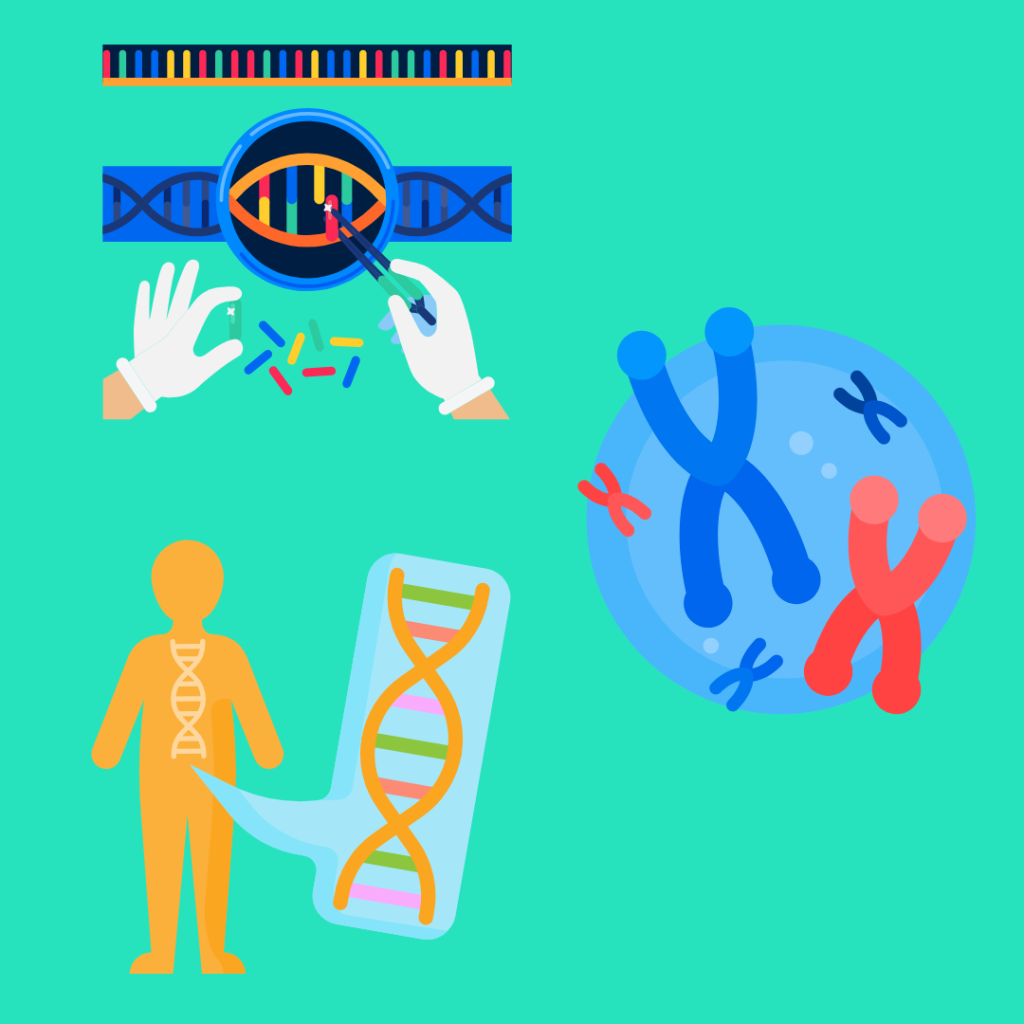
Genetics is the study of how traits, like eye color or height, are passed down from parents to children through genes. Genes are like instructions that tell our bodies how to grow and function. We inherit half of our genes from one parent and half from the other parent. Genetic information is stored in our cells and determines things like our hair color, how tall we’ll be, and even some health conditions we might be more likely to develop. Genetics helps scientists understand why we look and act the way we do and why some things run in families.
How Genetics Can Influence the Development of Certain Health Conditions
Genetics plays a crucial role in determining our risk of developing certain health conditions. Our genes contain instructions that can influence our chances of inheriting conditions like heart disease, diabetes, or cancer from our parents. While genetics can increase our susceptibility to certain illnesses, other factors like lifestyle choices (diet, exercise) and environmental influences also play a significant role. Understanding our genetic makeup can help healthcare providers predict, prevent, and treat various health conditions more effectively. By knowing our genetic predispositions, we can make informed decisions to lead healthier lives and manage potential risks proactively.
Is Vulvar Lichen Sclerosus Genetic?
Short answer, yes.
The last ten years have seen some breakthrough discoveries in the world of genetics and vulvar lichen sclerosus.
Scientists have discovered multiple genes implicated in vulvar lichen sclerosus.
Some genes, specifically those related to the immune system (HLA-DR and DQ), may play a role in making someone more susceptible to LS. In children with vulvar LS (VLS), a certain gene variant (HLA-DQ7) was more common compared to those without VLS. While the children themselves didn’t show strong autoimmune tendencies, many of their family members had other autoimmune diseases. In adults with LS, the same gene variant (HLA-DQ7) was also more prevalent. Different genetic patterns have been observed in various populations, suggesting a link between certain genes and the risk of developing LS or vulvar malignancy (De Luca et al., 2023).
Studies suggest that certain genes related to immune responses (like HLA-DQ7, -DQ8, -DQ9, -DR12) are more common in LS patients, indicating a genetic susceptibility. Changes in genetic sequences and how genes are expressed (epigenetics) have also been linked to LS. Some genetic variations in LS patients involve genes related to immune function and tumor suppression. This suggests that LS might result from a mix of genetic predisposition and environmental factors interacting to cause the disease (Corazza et al., 2021; De Luca et al., 2023).
Does that Mean Vulvar Lichen Sclerosus Runs in Families?
Some studies have shown a family connection with vulvar lichen sclerosus (Aslanian et al., 2006; Higgins & Cruickshank, 2012; Sherman et al., 2010; Virgili et al., 2017). Corazza et al. (2021) note that vulvar lichen scleorsus appears to have a genetic component as it often runs in families with rates ranging from 5.4% to 12% among patients. Kirtschig (2016) notes about 10% of people with vulvar lichen sclerosus have other family members with the same condition.
You will notice that percentages vary per paper. Percentages can vary because different studies use different sample sizes, different populations, etc. Because of this, some papers will report higher percentages than others; the sample of participants in a study is always just a snapshot of a much larger, complex, and diverse population of people with vulvar lichen sclerosus. Thus, we seem to be operating in a range of 5-12%.
Should I Tell My Family About My Diagnosis?
This decision, at the end of the day, is yours to make. We understand there are a lot of things built into the choice to disclose a genital diagnosis to the family; for example, there are shame, stigma, and cultural factors at play.

That said, if it feels safe for you, it can be important to tell your family. This is because, in our opinion, knowledge is power. Knowing that other members of the family *may* be slightly more predisposed to develop vulvar lichen sclerosus means they can better monitor themselves for symptoms and changes to the vulva. Doing this can allow them to advocate for themselves and, ideally, get diagnosed earlier.
Remember, the range is 5-12%; therefore, having vulvar lichen sclerosus does not mean anyone else in your family has it or will go on to develop it. But just like we let our family know about conditions like diabetes or multiple sclerosis so that other family members can make informed decisions and participate in early screening (when available), the same can apply to vulvar lichen sclerosus.
How I Reacted When I Learned There Could Be a Family Connection
I remember when my GP told me I had VLS, she noted there may be a family connection/a genetic component to the condition.
Knowing this, my sister was the first person I called post-diagnosis. I wanted to tell her in case she ever started experiencing symptoms; I wanted her to catch it early, and not have to suffer for over a decade like I did.
After, I called my dad. I called him for comfort and support, but also to ask if my mom had it. My mother passed away in my early 20s (interestingly, this is when my symptoms began), so I couldn’t ask her directly. My dad said he didn’t know, but that it was possible it was misdiagnosed because she has MS (multiple sclerosis), which can cause sexual dysfunction. It’s possible her other symptoms took precedence in doctor’s appointments, and that it went under the radar. I guess I will never know for sure.
To my knowledge, no one else in my family has lichen sclerosus.
Does this Mean my Children will Get Vulvar Lichen Sclerosus?
Nope, not necessarily. Remember the 5-12% range of people who have another family member with vulvar lichen sclerosus. That means quite a large percentage of people do not have vulvar lichen sclerosus in the family. Therefore, there is no guarantee that your child will or will not develop lichen sclerosus.
Again, we truly believe in empowering people with knowledge. If you have vulvar lichen scleorsus and have children, it can be helpful to know what signs and symptoms to watch out for. Learn more about pediatric (childhood) vulvar lichen sclerosus and what to watch out for (and what to do if you suspect your child has LS) by clicking on this link.
Conclusion On Is Vulvar Lichen Sclerosus Genetic and Does it Run in Families
In sum, researchers and scientists have discovered several genes implicated in vulvar lichen sclerosus; therefore, there seems to be a genetic component to vulvar lichen sclerosus. Lichen sclerosus does seem to run in families in about 5-12% of vulvar lichen scleorsus cases. Whether you tell your family is ultimately up to you, but it can be helpful for early detection and treatment.
Let us know if you have a family member with lichen scleorsus in the comments below.
Stay In The Loop! Never Miss A Blog Post, YouTube Video, Podcast Episode, Event, Or Product Launch By Getting On Our Newsletter!
Sign up for LSSN’s monthly newsletter here.
Sign up for TLLC’s newsletter here.
Reach Out To Me
Whether you are debating booking a support call with me, have a quick question, or want to share something related to my content, I can be reached via:
Email: Jaclyn@lostlabia.com
DM: @thelostlabiachronicles on Instagram, Facebook, and TikTok.
Support Resources
FREE Lichen Sclerosus Virtual Meetup hosted by myself and Kathy of Lichen Sclerosus Podcast – sign up here.
Feel free to book a 1:1 call with me if you struggle with grief and emotions. Simply click this link to learn more about lichen sclerosus peer support calls.

LSSN Membership – sign up here.
For a more detailed list of free and paid support resources, check out my LS resources page here.
References
Aslanian, F. M. N. P., Marques, M. T. Q., Matos, H. J., Pontes, L. F. S., Porto, L. C. S., Azevedo, L. M. S., & Filgueira, A. L. (2006). HLA markers in familial Lichen sclerosus. Journal Der Deutschen Dermatologischen Gesellschaft = Journal of the German Society of Dermatology: JDDG, 4(10), 842–847. https://doi.org/10.1111/j.1610-0387.2006.06087.x
Corazza, M., Schettini, N., Zedde, P., & Borghi, A. (2021). Vulvar Lichen Sclerosus from Pathophysiology to Therapeutic Approaches: Evidence and Prospects. Biomedicines, 9(8), 950. https://doi.org/10.3390/biomedicines9080950
De Luca, D. A., Papara, C., Vorobyev, A., Staiger, H., Bieber, K., Thaçi, D., & Ludwig, R. J. (2023). Lichen sclerosus: The 2023 update. Frontiers in Medicine, 10, 1106318. https://doi.org/10.3389/fmed.2023.1106318
Higgins, C. A., & Cruickshank, M. E. (2012). A population-based case–control study of aetiological factors associated with vulval lichen sclerosus. Journal of Obstetrics and Gynaecology, 32(3), 271–275. https://doi.org/10.3109/01443615.2011.649320
Kirtschig, G. (2016). Lichen Sclerosus—Presentation, Diagnosis and Management. Deutsches Aerzteblatt Online. https://doi.org/10.3238/arztebl.2016.0337
Sherman, V., McPherson, T., Baldo, M., Salim, A., Gao, X., & Wojnarowska, F. (2010). The high rate of familial lichen sclerosus suggests a genetic contribution: an observational cohort study. Journal of the European Academy of Dermatology and Venereology. https://doi.org/10.1111/j.1468-3083.2010.03572.x
Virgili, A., Borghi, A., Cazzaniga, S., A. Di Landro, Naldi, L., Minghetti, S., Verrone, A. M., Stroppiana, E., Caproni, M., Maria Rita Nasca, D’Antuono, A., Papini, M., V. Di Lernia, & Corazza, M. (2017). New insights into potential risk factors and associations in genital lichen sclerosus: Data from a multicentre Italian study on 729 consecutive cases. 31(4), 699–704. https://doi.org/10.1111/jdv.13867


My mother has LS as do I.
Hi Jaclyn, I think LS is genetic but maybe as time goes on numbers known in family members will increase as newer generations are recorded. I am 77 yrs old so am part of the generation where sex or things like LS were not discussed between mothers and daughters or even siblings. I was not even told by my mum about periods until the day it happened. I think things are different now thankfully as things are more open and thanks to you and your wonderful website LS is more openly discussed and helpful to so many.
Thank you Jaclyn and all at LSSN
I have had LS since my early 30’s. One of my daughters who is now 47 was recently diagnosed with LS as well. I have three other daughters who seem fine.
Hi there.
My sister & I both have L.S.
Our dad had it in his thirties (1960s).
(My daughter has L.P. instead.)